

7 A2 Cow Ghee Benefits and Nutrition Facts You Didn't Know
A2 cow ghee is valued for its rich aroma, traditional preparation, and role in Indian cooking. But which A2 cow ghee benefits are supported by nutrition facts, and which claims need more evidence?
The answer starts with understanding the milk used to make ghee, how the fat is processed, and what this ingredient contributes to everyday meals. Here's a practical guide to its nutrition, potential benefits, and key differences from regular ghee.
What Is A2 Cow Ghee?
A2 cow ghee is clarified milk fat made from milk sourced from cows identified as producing A2 beta-casein. During clarification, water and most non-fat milk solids are removed, leaving a product composed primarily of fat.
A1 and A2 refer to variants of beta-casein, a protein found in milk. Because ghee contains very little of the original milk's protein, findings about drinking A2 milk cannot automatically be applied to eating A2 ghee.
What are the 7 health benefits of A2 Cow Ghee?
The clearest advantages of ghee relate to its energy content, cooking qualities, and culinary uses. These are practical benefits of Molimor's A2 cow ghee generally, rather than proven health advantages unique to A2 ghee.

1. Provides Concentrated Energy
Fat supplies approximately 9 calories per gram, making ghee an energy-dense food. Even a small spoonful adds a meaningful amount of energy to a meal, so portion size matters.
2. Helps the Body Absorb Fat-Soluble Nutrients
Dietary fat helps the body absorb fat-soluble vitamins from foods eaten in the same meal. A little ghee served with vegetables can contribute fat to that meal, although ghee is not essential for absorbing these nutrients.
3. Adds Richness to Everyday Meals
Molimor A2 cow ghee brings a distinctive aroma and buttery flavour to familiar dishes. A small amount can enhance dal, khichdi, roti, or cooked vegetables without needing a large quantity.
4. Suits Several Cooking Methods
Ghee is commonly used for tempering spices, sautéing, and preparing traditional Indian dishes. Its relatively high smoke point makes it useful for many cooking tasks, although the appropriate temperature depends on the preparation and cooking method.
5. May Supply Small Amounts of Fat-Soluble Vitamins
Depending on the milk source and processing, ghee may contain small amounts of vitamins such as A and E. The quantity varies, so ghee should not be treated as a reliable substitute for foods that provide these nutrients in meaningful amounts.
6. Makes Portion-Based Meal Planning Simple
Because ghee is concentrated fat, measuring it with a spoon makes it easier to account for its contribution to a meal. For example, measuring a teaspoon rather than pouring freely helps keep track of added fat and calories.
7. Offers a Convenient Ingredient for Traditional Cooking
Ghee can be kept ready for finishing dishes, enriching recipes, or tempering spices. Its low moisture content also helps with storage when it is properly prepared, kept sealed, and protected from moisture and contamination.
What Are the Nutrition Facts of A2 Cow Ghee?
Ghee is primarily fat, with negligible protein and carbohydrate in well-clarified products. Its exact nutritional values depend on the product, so check the nutrition panel on your jar for the most relevant figures.
| Nutritional feature | What to know |
|---|---|
| Calories | Approximately 9 calories per gram of fat |
| Total fat | The main component |
| Saturated fat | Makes up a substantial share of the fat |
| Protein and carbohydrates | Usually negligible in well-clarified ghee |
| Vitamins | May contain small amounts of fat-soluble vitamins |
Ghee is not a complete food. Pair it with vegetables, pulses, whole grains, and other nutrient-rich ingredients for a varied diet.
What Are the Bilona Ghee Benefits?
Bilona describes a traditional preparation process, while A2 identifies a milk-protein variant. They refer to different aspects of the product, so neither term automatically guarantees the other.
In the traditional Bilona method, milk is cultured into curd, the curd is churned to separate butter, and the butter is heated to produce ghee. Some people prefer this approach for its traditional character and flavour.
However, there is not enough evidence to conclude that Bilona ghee is universally more nutritious than conventionally prepared ghee. If you are buying it for its preparation method, look for clear information about how the product is actually made.
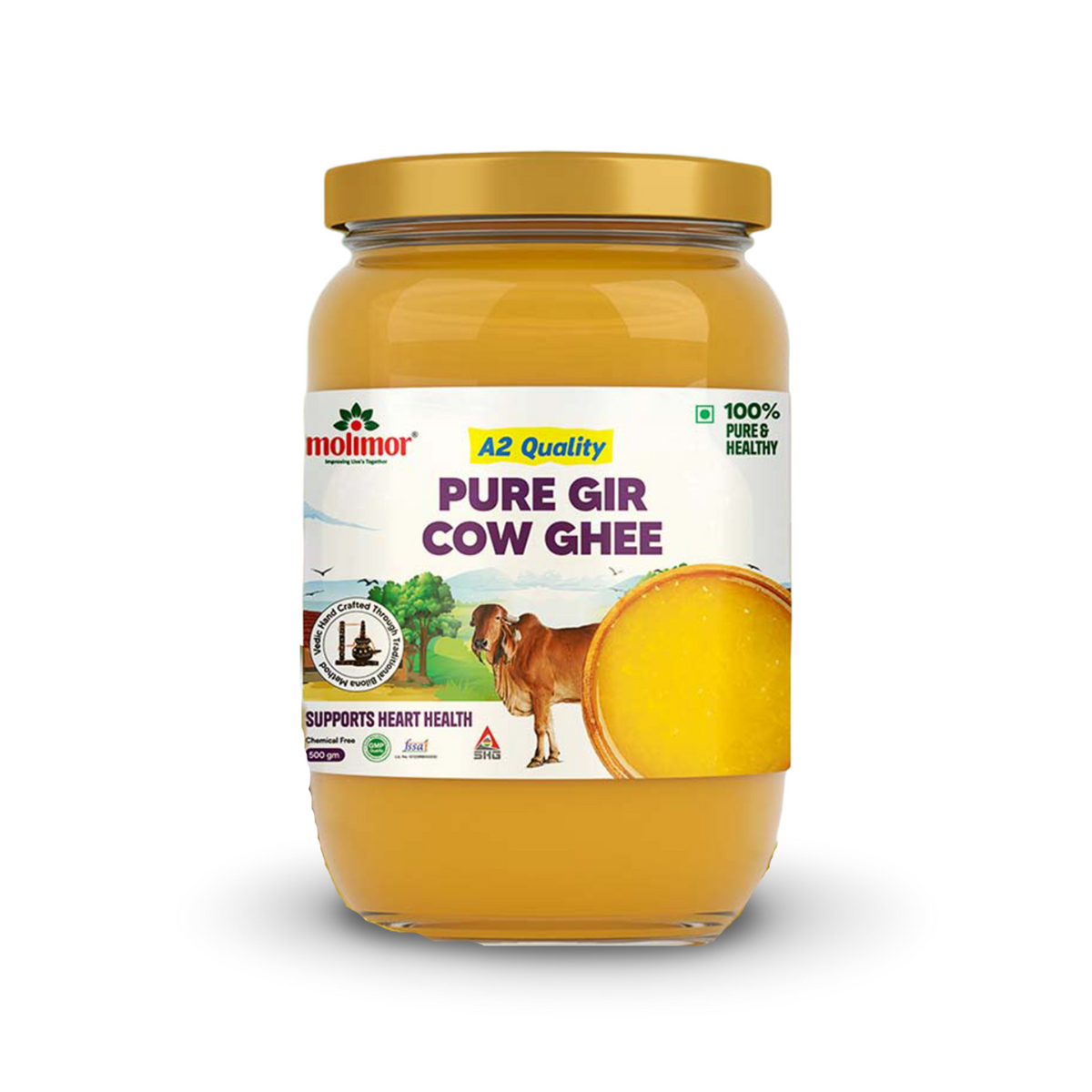
A2 Cow Ghee vs Regular Ghee: What Is the Difference?
The main distinction is the claimed milk source, not a guaranteed difference in the finished product's health effects.
| Feature | A2 Cow Ghee | Regular Cow Ghee |
|---|---|---|
| Milk source | Sourced from cows identified as producing A2 milk | Source and protein profile can vary |
| Main component | Milk fat | Milk fat |
| Preparation | May use different methods | May use different methods |
| Bilona-made? | Only if that method is used | Only if that method is used |
| Nutritional advantage | No universal superiority established | Depends on composition and serving size |
The term A2 Gir cow ghee benefits is relevant when the product is genuinely sourced from Gir cows. Gir is a cattle breed; the breed name alone does not prove a particular preparation method or establish extra health benefits.
How Can You Include A2 Cow Ghee in Your Diet?
Use ghee in modest amounts as one part of a balanced eating pattern. Molimor A2 Cow Ghee can be used in suitable portions to add flavour to everyday dishes such as dal, khichdi, roti and cooked vegetables.
People managing cholesterol or cardiovascular risk should discuss suitable fat choices with a qualified healthcare professional.
Final Thoughts
A2 cow ghee can bring flavour, concentrated energy, and cooking versatility to everyday meals. Its practical uses are easier to establish than claims that it offers unique medical benefits simply because it is labelled A2. Choose a product with transparent information, check its nutritional label, and enjoy it in measured portions as part of a balanced diet. To understand the role of fats in a balanced diet, read more about how dietary fats support energy and vitamin absorption in this guide from the American Heart Association.
Frequently Asked Questions
Q1: What Should You Check Before Buying A2 Cow Ghee?
Ans: Start by checking the product label, manufacturer details, food-safety information and nutrition panel. If the product claims to come from A2-producing cows or a specific breed such as Gir, look for transparent information about milk sourcing. Clear labelling helps you make an informed choice without relying solely on marketing claims.
Q2: Does A2 Cow Ghee Have Different Nutritional Properties From Regular Ghee?
Ans: Both products consist primarily of milk fat. A2 refers to a beta-casein protein variant in the source milk, but most milk proteins are removed during the clarification process. Therefore, the A2 label alone does not establish that the finished ghee has superior nutritional or health benefits.
Q3: How Is Bilona Ghee Prepared?
Ans: The traditional Bilona process begins with milk being cultured into curd. The curd is then churned to separate butter, which is heated to produce ghee. This differs from methods that separate cream directly. If the preparation method matters to you, check whether the manufacturer clearly explains how its product is made.
Q4: Can A2 Cow Ghee Be Part of a Balanced Diet?
Ans: Yes, it can fit into many people's diets when consumed in suitable portions. Since ghee is calorie-dense and contains a substantial amount of saturated fat, consider your overall food intake and dietary needs. Pair it with a varied diet containing vegetables, pulses, whole grains, fruits, and other nutrient-rich foods.
Q5: Is A2 Cow Ghee Suitable for People With Milk Allergies?
Ans: Do not assume that ghee is safe for someone with a milk allergy. Although clarification removes most non-fat milk solids, trace milk proteins may remain. Anyone with a diagnosed milk allergy should seek advice from an allergy specialist before consuming it.


